Yard Dog Waste Cleanup: The 2026 Seasonal Playbook
A yard changes with every season, and so should your yard dog waste cleanup strategy. What works on a dry August lawn fails in a March thaw, when weeks of hidden winter waste surface all at once. This 2026 seasonal playbook walks you through spring blitzes, summer maintenance, autumn leaf traps, and winter survival, so your grass stays healthy and your weekends stay yours.
I manage a large mixed lawn for two active spaniels, and treating cleanup as a calendar rather than a chore has cut my total effort roughly in half. Here is the year, month block by month block.
Spring: The Great Thaw Blitz
Spring is the toughest moment in the whole yard dog waste cleanup calendar. Snow and frost preserve waste through winter, so the thaw reveals a backlog that a single pass cannot clear. Plan a dedicated blitz over one or two dry days rather than pretending a normal walk-through will do.
Work in a grid so you never miss a patch, and expect softened, harder-to-lift waste. A rigid, sharp-edged tool is your friend here because thawed ground is muddy and slick.
Protecting New Grass Growth
Old waste left too long burns patches into the lawn as nitrogen concentrates. Clear the backlog before you fertilise or overseed, or you will be feeding weeds into the very spots you want to repair.
Summer: Fast, Frequent, Fly-Free
Heat accelerates decomposition and draws flies, so summer rewards speed. Daily quick passes beat weekly marathons. The waste is firm and easy to lift, so this is the season to build the habit that carries you through the year.
- Scoop within hours: Heat and flies act fast, so same-day pickup keeps the yard usable.
- Hose down hard surfaces: Patios and paths need a rinse to stop bacteria baking on.
- Store bags in shade: Sealed liners in a shaded bin cut odour dramatically.
- Water treated spots: A quick soak dilutes any residual nitrogen on the grass.
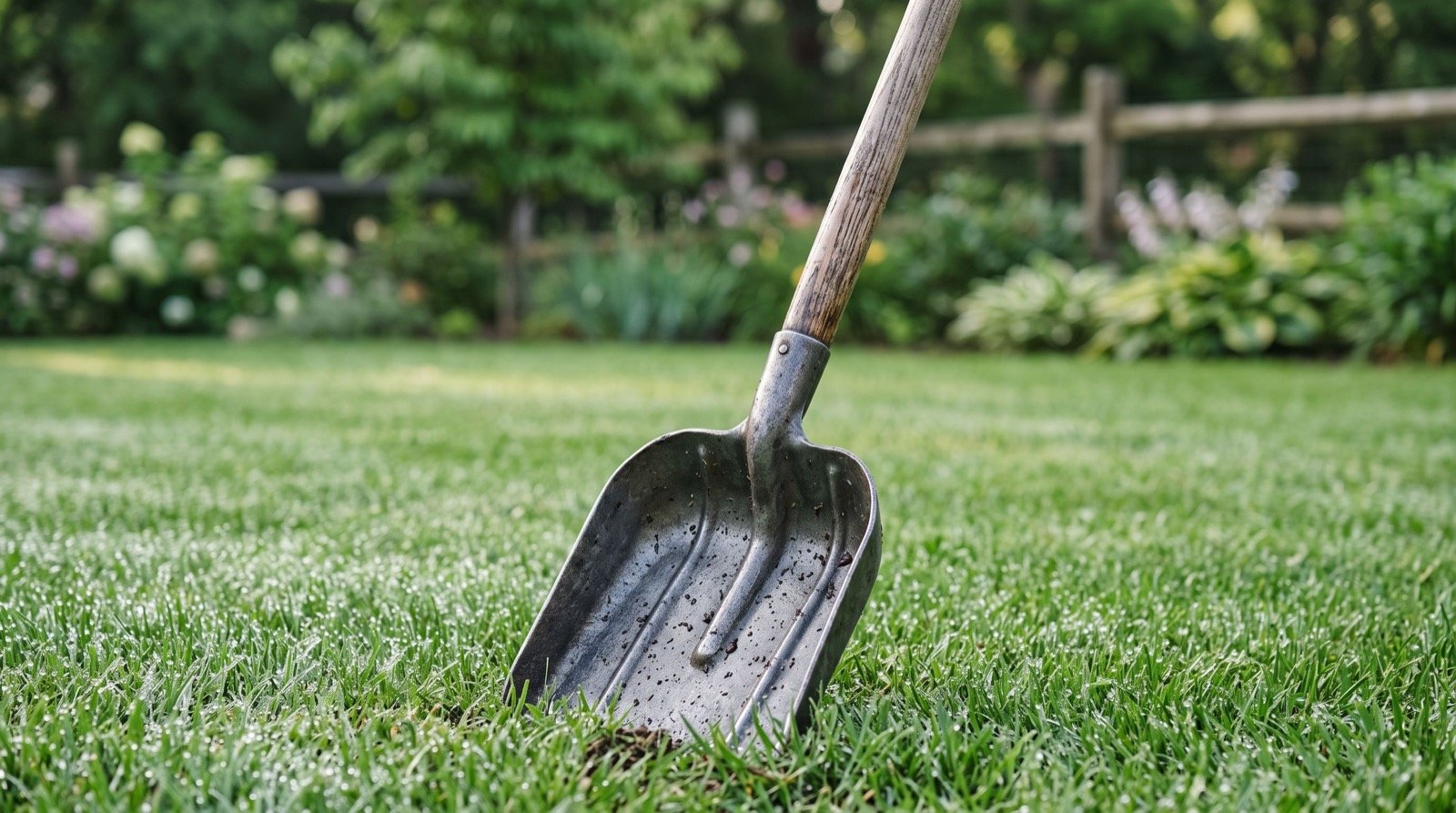
For fast daily rounds I keep a Pooper Scooper metal hung by the back door, because a tool you can grab in one motion is a tool you will actually use every day.
How Do You Handle Autumn Leaves Hiding Waste?
Autumn’s falling leaves are the great concealer, burying waste until you step in it. The answer is to sequence your chores: clear waste first, then rake leaves, never the other way around. Raking over hidden waste smears it through the whole pile.
Do a careful visual sweep before the first big leaf drop, then keep a lighter rhythm as foliage accumulates. A leaf blower on a low setting can expose hidden piles without disturbing them.
| Season | Main Challenge | Frequency | Key Tool |
|---|---|---|---|
| Spring | Thaw backlog | One-off blitz + weekly | Rigid rake & tray |
| Summer | Flies, odour | Daily | Quick-grab scoop |
| Autumn | Hidden under leaves | Twice weekly | Scoop + blower |
| Winter | Frozen, snow-covered | After each snowmelt | Long-handle scoop |
Winter: Don’t Let It Bury You
The temptation in winter is to let waste vanish under snow and deal with it in spring. Resist it. Every snowfall that covers uncollected waste adds to the brutal spring backlog. Clear what you can after each melt or during dry cold snaps.
- Mark a single toilet zone to concentrate waste and simplify pickup.
- Clear waste during any thaw window before the next snowfall locks it in.
- Keep a long-handled tool so you never kneel in snow.
- Bag promptly; frozen waste is odourless but returns with a vengeance when it warms.
- Store your gear indoors so metal parts do not seize in the cold.
Winter is also when durable storage bags earn their keep. A tough heavy duty tool bag keeps your scoop, spare liners, and gloves together and dry between those short, cold cleanup windows.
The Frozen-Ground Trick
Frozen waste actually lifts cleaner than soft waste because it does not smear. Use a cold, dry morning to your advantage and clear firm pieces quickly before a midday thaw softens them.
Why Seasonal Timing Protects Your Lawn and Water
Letting waste linger is not just unsightly; it harms soil and runoff. Research summarised by the University of Minnesota Extension notes that pet waste carries nutrients and pathogens that wash into waterways during rain and snowmelt. Seasonal, timely cleanup keeps those contaminants out of storm drains and off your grass.
Timing your effort to the season is therefore both a lawn-care and an environmental win. You do less total work and you keep your local water cleaner.
Transition Weeks: The Overlooked Danger Zones
The hardest moments are not mid-season but the ragged weeks between seasons. Late autumn’s first frosts freeze waste you meant to collect, and early spring’s freeze-thaw cycles alternately hide and reveal it. These transition weeks catch out owners who plan for tidy season boundaries that nature never actually respects.
My rule is to over-clean during transitions. When the forecast swings between frost and thaw, I do an extra sweep on every dry day, because I know a missed pile now becomes a locked-in problem for weeks. Treat the shoulder seasons as their own demanding phase, not an afterthought.
Reading the Forecast Like a Groundskeeper
Professional grounds staff plan cleanup around weather windows, and you can too. A dry, mild afternoon before a wet cold snap is prime collection time. Learning to spot those windows turns weather from an obstacle into an ally.
Composting Leaves Without Composting Waste
Autumn tempts many owners to bag leaves and waste together for convenience. Resist it. Leaf mould is a superb free soil improver, but only if it is free of dog waste, which introduces pathogens that home composting cannot reliably kill. Keep the two streams separate and both jobs stay safe.
Frequently Asked Questions
How do I tackle a whole winter’s backlog in spring?
Wait for a dry day, work the yard in a grid, and use a rigid rake-and-tray tool for softened waste. Clear the entire backlog before fertilising or overseeding so new grass is not burned.
Should I leave dog waste under the snow until spring?
No. Waste left under snow builds into a large, unpleasant spring backlog and leaches into meltwater. Clear it during thaw windows or dry cold snaps whenever you can reach it.
Does dog waste really damage my lawn?
Yes. Concentrated nitrogen from waste burns brown patches into grass over time. Prompt removal, followed by a light watering of the spot, prevents most of this damage.
How often should I clean the yard in summer?
Ideally daily. Heat speeds decomposition and attracts flies, so a quick same-day pass keeps the yard pleasant and stops bacteria building on hard surfaces.
Wrapping Up the Year
Smart yard dog waste cleanup is about matching your effort to the season: blitz the spring thaw, stay daily through summer, sequence around autumn leaves, and keep chipping away all winter. Follow the playbook and you trade dreaded marathons for easy rhythms. If a home move ever interrupts your routine, an experienced local team can handle the heavy furniture while you keep the yard on track for your dogs.